Manaslu vs Everest Base Camp vs Annapurna: Which Nepal Trek Is Right for You?
By Karlie Place
If you've found yourself daydreaming about the Himalayas, you are in good company. Nepal is home to some of the most spectacular trekking on the planet, and the country offers more than one path to that life-changing mountain experience. The trick is finding the trek that actually fits the version of the Himalayas you want to see.
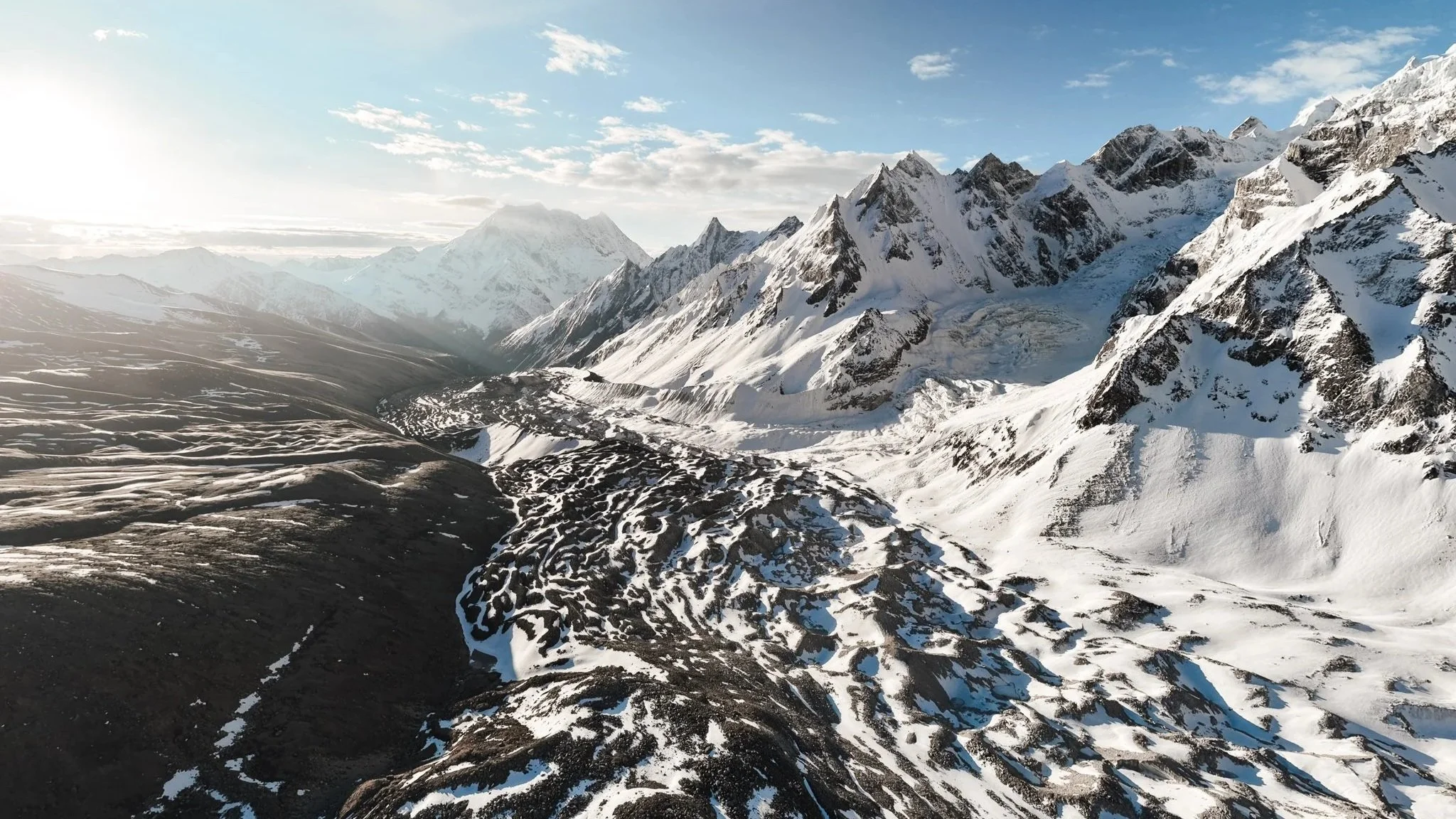
I trekked the Manaslu Circuit in spring 2026 and it was one of the most extraordinary trips of my life. But it took me a while to land on Manaslu as the right trek for me, because the conversation around Nepal trekking is almost entirely dominated by Everest Base Camp. If you've been doing the research, you've probably noticed the same thing.
Here's an honest, side-by-side comparison of the three most popular Himalayan treks, plus a section at the end on the lesser-known routes my guides told me about that I'd never even heard of. By the end of this post, you should have a much clearer sense of which one is calling your name.
The Big Three at a Glance
These are the three iconic trekking routes that most first-time visitors to Nepal are choosing between. All three are life-changing. They are also very different experiences.
Nepal's Three Iconic Treks · At a Glance
Manaslu
Circuit
8th-highest peak
87 miles
10–14 days
Larkya La 5,106 m
~10,000 trekkers / year
Everest
Base Camp
Highest peak
80 miles
12–14 days
Kala Patthar 5,545 m
~60,000 trekkers / year
Annapurna
Circuit
10th-highest peak
100–145 miles
12–16 days
Thorong La 5,416 m
~30,000 trekkers / year
Same country. Same mountain range. Three very different journeys. Let me walk you through how they actually feel different, one category at a time.
Crowds and Solitude
This is the biggest practical difference between the three treks, and the one most likely to shape your day-to-day experience.
Trekkers Per Year
Manaslu
~10K
Everest BC
~60K+
Annapurna
~30K
Manaslu sees roughly one-sixth the foot traffic of EBC.
On the Manaslu Circuit, I'd often walk for two or three hours without seeing another trekker. The teahouses had two or three groups at most, sometimes just my group of two. By contrast, EBC during peak season has crowded teahouses, multiple groups jostling for hot showers and dinner tables, and a steady stream of trekkers along the trail.
Neither is inherently better. If you love the energy of meeting other trekkers from around the world, EBC delivers that in spades. If you want more space to be alone with the mountains, Manaslu does it best.
I made a side-by-side comparison reel about this on Instagram a few weeks after I got home, if you want to see what the visual difference actually looks like on the ground:
It is worth mentioning briefly that there's been a lot of recent news coverage about issues on Mount Everest itself: the overcrowding near the summit, the high-profile deaths, the strain on Sherpa communities. That coverage is mostly about people climbing the mountain at 8,849 meters, not trekkers walking to base camp at 5,364 meters. The two experiences are very different. But the overall popularity of the Everest region has made some travelers start looking at other Himalayan options, which is part of why posts like this one exist. There's nothing wrong with wanting EBC. There's also nothing wrong with wanting a quieter trail.
Distance and Highest Point
All three treks are long, and all three reach over 5,000 meters at their highest point. The differences are real but smaller than you might think.
Total Trek Distance
Manaslu
87 mi
140 KM
EBC
80 mi
130 KM
Annapurna
115 mi
185 KM
Highest Point Reached
Manaslu
5,106 m
LARKYA LA
EBC
5,545 m
KALA PATTHAR
Annapurna
5,416 m
THORONG LA
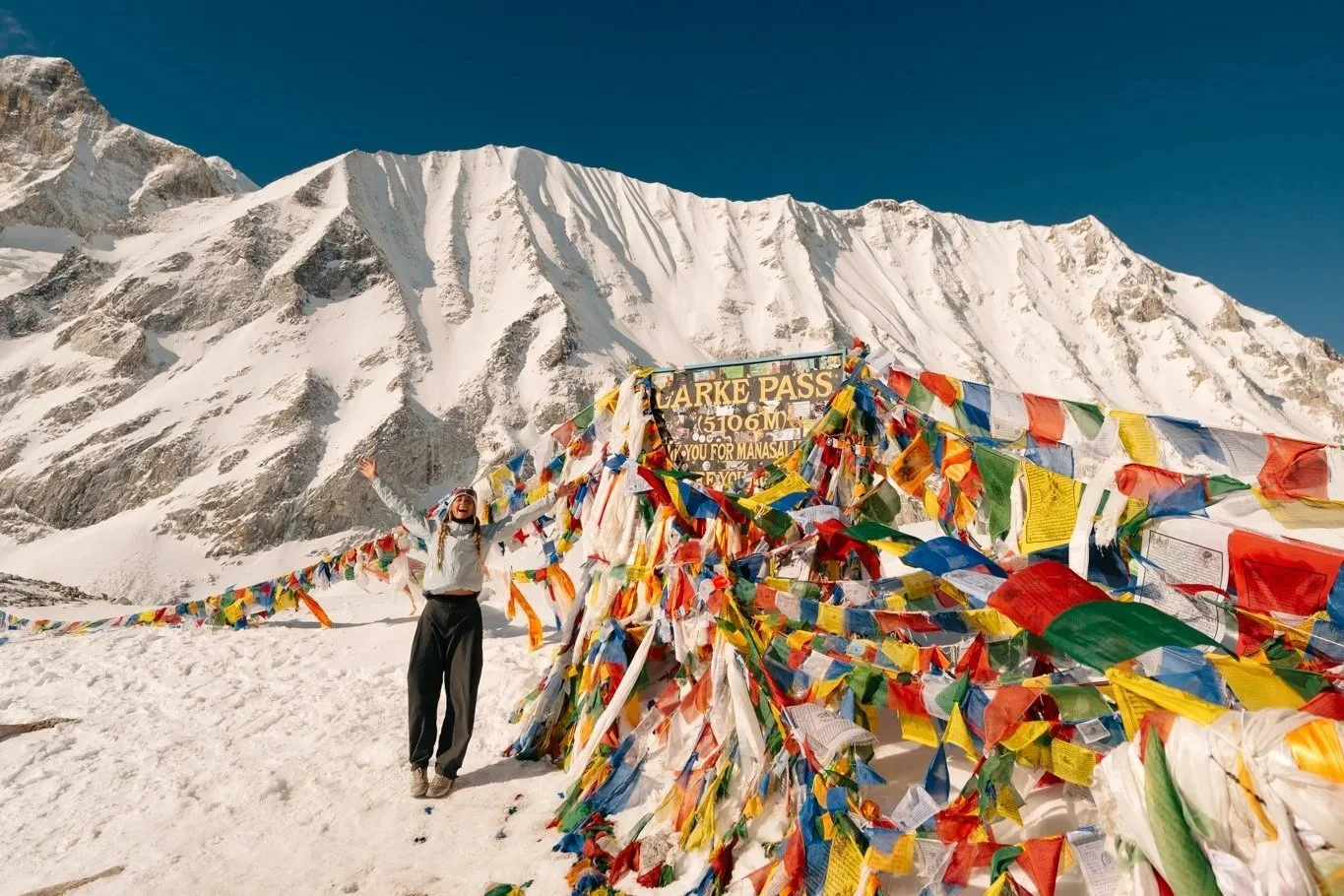
All three are serious altitude. Anything above 5,000 meters means thin air, headaches, slow walking, and the very real possibility of altitude sickness. None of these treks should be undertaken lightly. None of them require technical climbing skills, but all of them require respect for the altitude and a willingness to take Diamox or descend if your body starts protesting.
Getting There
This is where the practical experience starts to differ in big ways.
Manaslu: the jeep ride
The Manaslu Circuit begins with an 8 to 10 hour jeep ride from Kathmandu to Soti Khola or Machha Khola, depending on road conditions. It is rough, dusty, and long, but it is reliable. No weather delays. No canceled flights. You start your trek when you say you'll start your trek.
EBC: the Lukla flight
Everest Base Camp trekkers fly from Kathmandu to Lukla, a 35-minute scenic flight to one of the most famously dramatic airports in the world. The Lukla flight is also one of the most weather-dependent flights you'll ever take. Delays of one to several days are not unusual during peak trekking season, which means you need to build in flexibility in your itinerary.
Annapurna: drive plus optional flight
The Annapurna Circuit typically starts with a 6 to 8 hour drive from Kathmandu to Besisahar or Jagat, and many modern itineraries take a short flight from Jomsom back to Pokhara at the end to cut down on time. The Annapurna region also has a road that now reaches partway into the circuit, which means trekkers can shorten the route by jeep if they prefer.
Cost
Approximate Trek Cost (USD per person)
Manaslu
~$2,125
EBC
$1,400
to $1,800
Annapurna
$1,000
to $1,400
All prices vary by operator and season. Manaslu is more expensive partly because a licensed guide is mandatory.
Annapurna is typically the most affordable of the three because guides are optional and infrastructure is well-developed. EBC is in the middle (with the Lukla flight as the wild card cost). Manaslu is the most expensive of the three because it's a restricted area requiring a licensed guide, which adds to both the price and the safety.
For what it's worth, I paid roughly $2,125 USD per person for my Manaslu trip through Ecuatraveling. Worth every cent for the experience I had with my guide Jiwan and porter Das.
Culture and Landscape
This is where each trek's personality really comes through.
Manaslu: Tibetan Buddhist villages and untouched culture
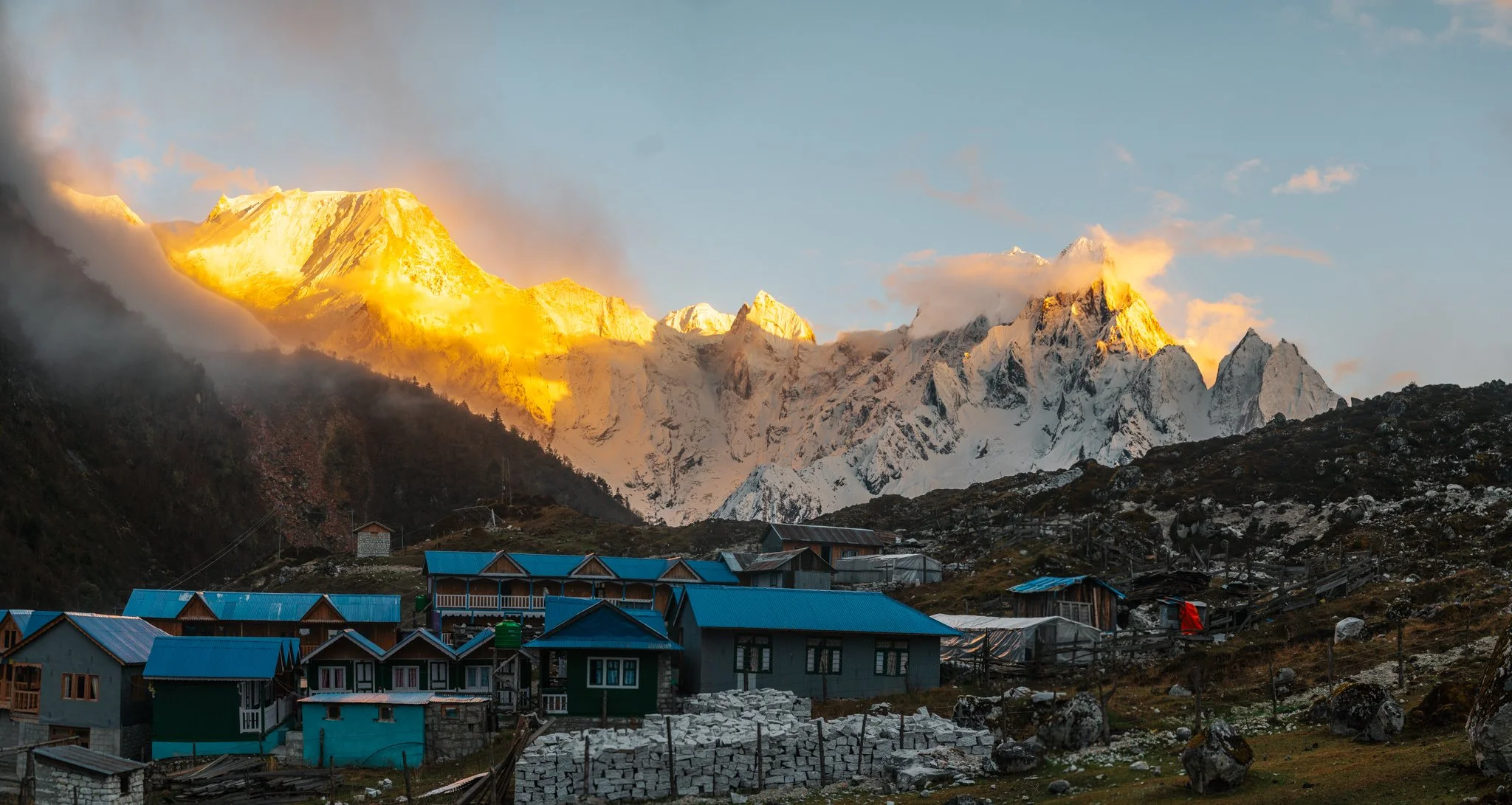
The Manaslu Circuit passes through villages like Lho, Samagaon, and Samdo, where Tibetan Buddhist culture has been preserved in a way that's increasingly rare. Prayer wheels in the wind, mani walls stretching for hundreds of meters, monasteries carved into hillsides, salt traders crossing high passes with yak caravans. I witnessed Saga Dawa, the holiest day in Tibetan Buddhism, in Samdo village, and the community draped me in a khata scarf and let me participate in the ritual blessings. It is the kind of cultural experience you cannot find on the more developed trails.
EBC: Sherpa culture and the world's highest peak
The Everest region is the heart of Sherpa culture, with its famous monasteries (Tengboche), bustling trading town of Namche Bazaar (which has bakeries, espresso bars, and Wi-Fi), and the unmistakable views of Everest, Lhotse, Nuptse, and Ama Dablam. The cultural experience is more developed and accessible because of decades of mountaineering tourism.
Annapurna: dramatic landscape diversity
The Annapurna Circuit is famous for its sheer variety. You start in subtropical rhododendron forests, climb through traditional Gurung villages, cross into the dry Tibetan Plateau-style landscapes of Manang and Mustang, and finish in the sacred Hindu-Buddhist pilgrimage site of Muktinath. No other trek in Nepal covers as many ecosystems and cultural zones.
So Which One Should You Choose?
There's no winner here. There's only the trek that fits the experience you want.
Choose Manaslu if...
- You want solitude and a trail that still feels like wilderness
- You're drawn to Tibetan Buddhist culture and untouched mountain villages
- You'd rather start your trek with a reliable jeep ride than a delay-prone flight
- You appreciate the safety of trekking with a mandatory licensed guide
- You want to walk in the shadow of an 8,000-meter peak without the crowds
Choose Everest Base Camp if...
- Seeing Mount Everest in person is the bucket list item that brought you to Nepal
- You love the energy of a busy trail and meeting other trekkers
- You want more developed infrastructure (Wi-Fi, hot showers, cafes)
- You're comfortable with the Lukla flight and the possibility of weather delays
- You want Sherpa culture and the mountaineering history that goes with it
Choose Annapurna if...
- You want the most landscape variety in a single trek
- You're working with a tighter budget
- You'd like the flexibility to trek without a mandatory guide (though you can still hire one)
- You want to visit Muktinath, a sacred pilgrimage site
- You like the idea of finishing in Pokhara, with its lakeside cafes and post-trek relaxation
I chose Manaslu, and I'd choose it again tomorrow. If you want my full breakdown of what those ten days actually felt like, including the dog bite, the broken camera, Saga Dawa, and the moonlight start to Larkya La, read my full Manaslu Circuit Trek Day-by-Day Itinerary.
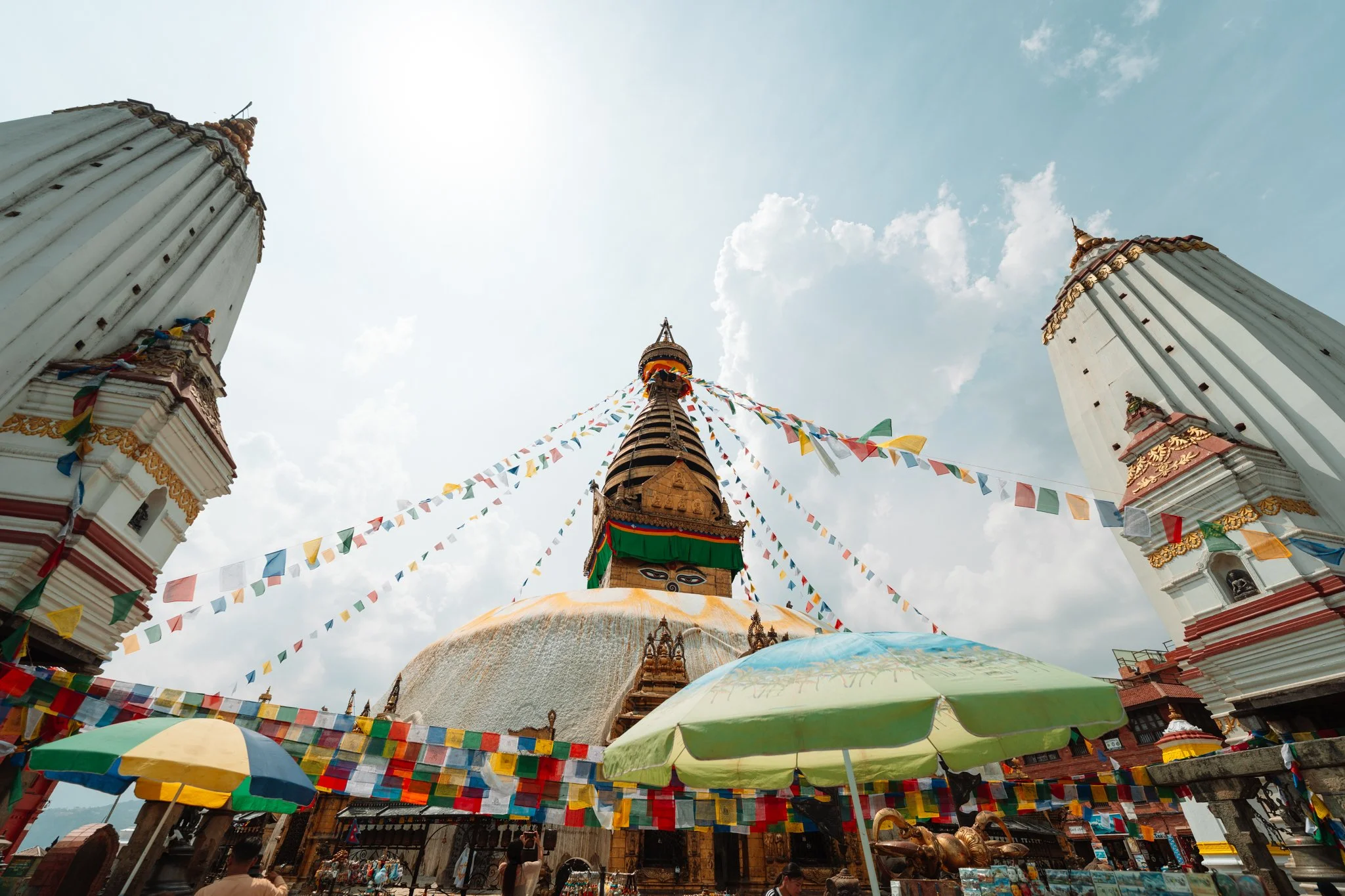
Other Treks in Nepal Worth Considering
While I was on the trail, my guide Jiwan mentioned dozens of other treks I'd never heard of. Some are quieter than even Manaslu. Some go to sacred lakes. Some are tent-camping expeditions through high-altitude desert. Nepal has way more trekking to offer than the big three. Here's a quick look at some of the lesser-known options I'm filing away for my own future trips. Click each trek name to learn more.
Lesser-Known Nepal Treks · Quick Reference
Hidden Buddhist valley off the Manaslu Circuit · 18–21 days · max 5,093 m
A sacred valley that was closed to foreigners until 2008. Tibetan-heritage community, mani walls among the longest in Nepal, ancient meditation caves. Often combined with the Manaslu Circuit for a 3-to-4-week trek.
Ancient Tibetan kingdom · 12–17 days · max ~3,800 m
A high-altitude desert kingdom that was forbidden to outsiders until 1992. Walled medieval city of Lo Manthang, cave monasteries, monsoon-shadow climate (good for summer trekking). Requires a $500 USD restricted area permit.
Tilicho Lake (Annapurna Detour)
One of the world's highest lakes · added to Annapurna · max 4,920 m
A turquoise glacial lake at 4,920 meters, technically the highest large lake in the world. Most trekkers add it as a 3-day side trip to the Annapurna Circuit. The trail to the lake is exposed and rocky but the payoff view is unreal.
Closest Himalayan trek to Kathmandu · 7–10 days · max 4,984 m
A shorter trek that doesn't require a flight, hugely impacted by the 2015 earthquake and still rebuilding. Beautiful, accessible, less commercial than the big three, and a good option if you only have ten days in Nepal.
Restricted-area side valley off Annapurna · 13–19 days · max 5,400 m
A remote, deeply spiritual valley with fewer than 500 visitors a year. Crosses the Kang La Pass at 5,400 m. Restricted area permit required. Often combined with the Annapurna Circuit for a longer expedition.
Third-highest mountain in the world · 21–28 days · max 5,143 m
Far eastern Nepal, near the Sikkim border. One of the longest and most remote treks in the country. For experienced trekkers who want true wilderness. Camping required in some sections.
Nepal's most remote region · 22–28 days · max 5,360 m
Made famous by Peter Matthiessen's book The Snow Leopard. No roads, no airstrips in the upper region, no teahouses on most of the route. A real camping expedition through trans-Himalayan desert and turquoise lakes. The most remote trek on this list.
I'm not personally experienced with any of these yet. I'm just passing along what my guides told me, and what I've researched since. Each one of them sounds like a different version of the Himalayan dream, and I'd love to come back for any of them.
The Bottom Line
The Himalayas don't care which trek you pick. They will change you either way.
If Everest Base Camp is calling you, go do it. If you're drawn to the variety of Annapurna, that's the right answer for you. If, like me, you want to walk for a week in near-solitude through Tibetan villages with an 8,000-meter peak just over your shoulder, the Manaslu Circuit is waiting.
Whichever one you choose, do it well. Book a real guide. Buy a real rain jacket. Take Diamox. Pack a deck of cards. Bring a few things you'd love to give away on the trail. And come home a little bit changed.
⭐ FREE PRINTABLE MANASLU PACKING LIST PDF
If you've landed on Manaslu as your trek and you're ready to start packing, I made a printable PDF version of my full packing list, with exact quantities and which items I'd never go without. Get the free printable packing list here.
You'll also get my Sunday newsletter, We're Going Places, with behind-the-scenes from my next trips.
More on the Manaslu Circuit
If you've landed on Manaslu and you want to keep researching, my full Manaslu cluster lives here:
- The Day-by-Day Itinerary — what those ten days actually felt like, day by day
- The Photographer's Packing List — what to bring, with exact quantities
- How to Book the Trek — the step-by-step booking guide