Atacama Desert Packing List: What I Actually Wore and Shot With
This post contains affiliate links. If you book or buy through them I may earn a small commission at no additional cost to you. Thanks for supporting karlieplace.com.
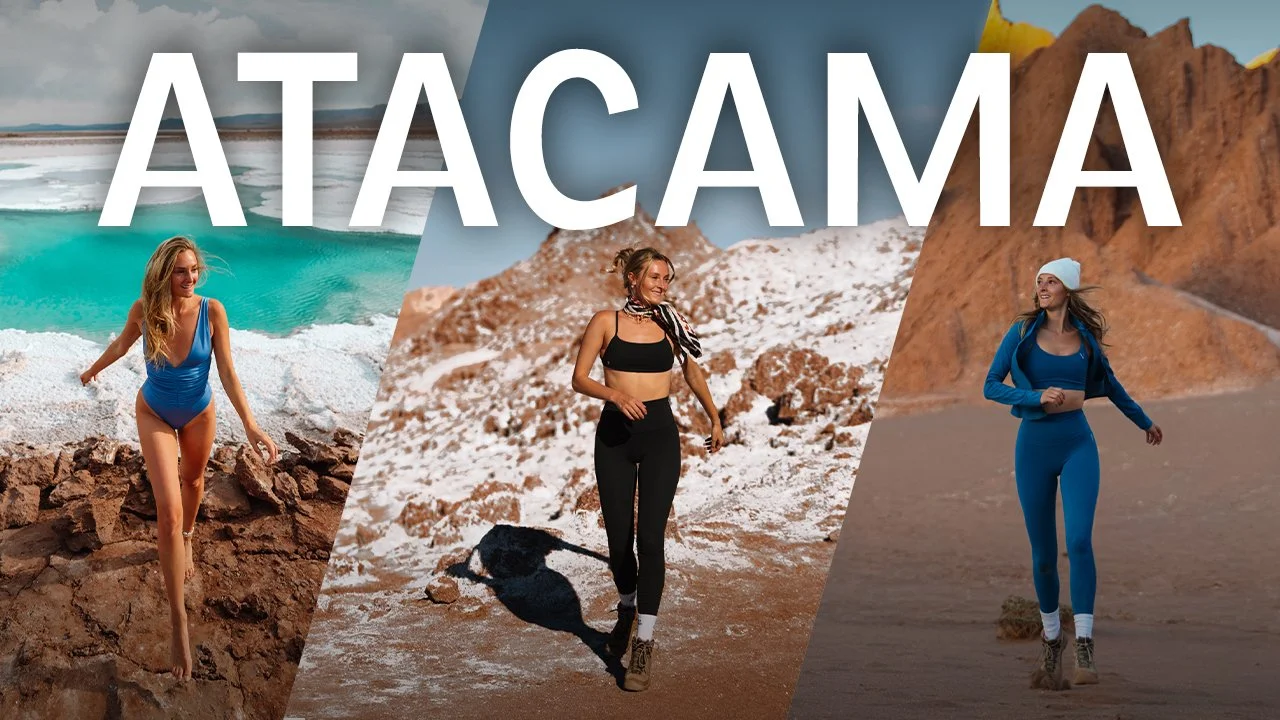
The thing nobody tells you about the Atacama Desert is that you are packing for two climates in the same 24 hours. Daytime hit 25C and up while I was there. The pre-dawn excursions run well below freezing. I wore almost everything I brought, often on the same day, sometimes within the same three hours. So this Atacama Desert packing list is not a generic desert list. It is what actually came out of my bag in San Pedro, what earned its space, and the two things I would pack differently if I went back.
The One Rule That Shapes This Whole Atacama Desert Packing List
Layers are not a suggestion here, they are the entire strategy. San Pedro de Atacama sits at roughly 2,400m. The marquee excursions climb a lot higher: the altiplanic lagoons sit around 4,000m and El Tatio is at 4,320m. Altitude plus a bone-dry atmosphere means the temperature falls off a cliff the second the sun does, and climbs just as fast when it comes back.
Practically, that means every day looked like this: leave the hotel in a puffy and a beanie, strip down to a t-shirt by 10am, put it all back on at the last viewpoint. If you pack one warm layer and one cool outfit, you will be uncomfortable half the time. Pack a system instead.
For how this maps onto an actual trip length and season, I broke that down separately in how many days you need in the Atacama and the best time to go.
Clothing: The Layer System That Worked
Nothing here is fancy. It is just the right stack, in the right order.
Base layer, top and bottom. Merino if you have it. The pre-dawn excursions are the whole reason this exists in your bag.
T-shirts and a long sleeve. Midday is genuinely hot and the sun is brutal at altitude, so I leaned on a lightweight long sleeve more than a tank.
A mid layer fleece or hoodie. The one you actually reach for. Mine basically lived in the tour van.
A real insulated jacket. Not a fashion puffy. Sub-zero at dawn is not the place to find out yours is decorative.
A wind shell. The altiplano is exposed and the wind at the lagoon viewpoints cuts.
Hiking pants, not jeans. You will be getting in and out of vehicles constantly and crouching on salt crust.
Beanie, gloves, buff. Small, weightless, and the difference between enjoying a sunrise and enduring it.
Sturdy closed shoes. The salt flat terrain is rugged, sharp and rocky, not the smooth mirror surface people expect.
The Two Items People Forget (And Regret)
Water shoes. Two separate stops need them. At Cejar Lagoon you are getting into hypersaline water on a tight schedule, and at Laguna Baltinache the salt crystals around the designated swimming lagoon are genuinely sharp. Barefoot is a bad time in both places.
Serious sun protection. High-altitude desert sun is a different animal. Sunscreen, a real hat, and sunglasses you would trust on a glacier. There is almost no shade at any of the sites.
Camera Gear: What Survived Salt, Dust and Freezing Dawns
The Atacama is a photographer's dream and a gear stress test in equal measure. Salt air at Cejar Lagoon, volcanic dust at Piedras Rojas, sub-zero temperatures before sunrise. Your equipment earns its keep.
I shot everything on my Sony A7IV. The 14mm f/1.8 handled the wide volcanic landscapes and the 35mm f/1.4 did everything else, from portraits to detail shots to the flamingo lagoons. The 14mm especially earns its weight at Piedras Rojas and Laguna Miscanti, where the scale of the landscape genuinely demands a wide angle.
If you care about the flamingos at Laguna Chaxa, bring a telephoto and a tripod. The birds sit far back from the designated path and the light is tricky. That is the one stop where a wide lens will leave you with nothing.
For the full breakdown of how I pack it and why, see my full 7-day Atacama itinerary, where I note the gear choices site by site.
Camera Protection Is The Part To Take Seriously
Leave the good camera on shore at Cejar. The salt is brutal on gear. I brought my phone in for a couple of minutes only, being careful about splashes and drips, and that felt like the right ceiling.
Keep everything sealed between stops. The volcanic dust gets everywhere. I kept the bag zipped in the van and only opened it at the site.
More SD cards than you think you need. The light here is extraordinary and you will shoot far more than you planned.
Batteries live in an inside pocket at dawn. Cold drains them fast, and the pre-dawn starts are exactly where you do not want a dead battery.
A Note On Drones
Pack yours only if you have done the homework. Drones are not allowed in most of the national reserves and parks in this region, and I found very few places where flying was legal the entire trip. If a drone is a core part of your kit, plan around that reality rather than assuming you will find a window.
Tech, Connectivity and Documents
Wi-Fi in the desert is unreliable. This is the category where a little prep saves an actual headache.
Download everything offline before you land in Calama. Maps, Google Translate, your hotel confirmation. Do it at the airport, not at the hotel.
An eSIM. Sorting data before you arrive is much easier than sorting it after. A Chile eSIM through Airalo installs before you leave home and activates when you land.
A portable charger. Long tour days with early pickups and no outlets in the van.
A refillable water bottle. You lose water constantly in this air without noticing, and hydration is the single most effective altitude strategy.
Some Chilean pesos, plus a card. San Pedro is increasingly card-friendly. Worth knowing: Laguna Baltinache entry is 15,000 CLP and is card only, contrary to older information online saying cash only.
How Your Itinerary Changes What You Pack
If you are renting a car for part of the trip, you get sunrise access to places like Valle de la Luna before the tour buses arrive, which means more pre-dawn layers and fewer midday clothes. Rentals are better out of Calama than San Pedro, and comparing cars at Calama El Loa Airport on DiscoverCars is the fastest way to see what is actually available.
If you are doing everything by guided tour, you are on their schedule, which usually means very early pickups and set time at each stop. Pack so that you can add and remove layers fast in a van. Most of the sites cap daily visitors, so booking ahead protects your spot, and you can see the range of San Pedro de Atacama tours on GetYourGuide to figure out which excursions you actually want.
For which of those excursions are worth your time, I ranked them in the 9 best things to do in the Atacama, plus the one I would skip. And where you base yourself affects your early starts more than people expect, which I covered in where to stay in San Pedro de Atacama.
What I Would Pack Differently Next Time
Two changes. First, warmer gloves. Mine were fine for a cold morning and not fine for a genuinely freezing one, and at 4,000m plus you want to be able to operate a camera without your hands going numb. Second, a lens cloth in every pocket rather than one buried in the bag. Between salt spray, dust and the temperature swings fogging glass, I was cleaning constantly and always reaching for something I had packed too deep.
Frequently Asked Questions
What should I wear in the Atacama Desert?
Layers, always. Days reach 25C and above while pre-dawn excursions drop well below freezing, so plan on a base layer, a fleece or hoodie, an insulated jacket and a wind shell, plus hiking pants and closed shoes. You will genuinely use all of it, often on the same day.
Do I need hiking boots for the Atacama?
Full boots are not required, but sturdy closed shoes are. The salt flat terrain is rugged, sharp and rocky rather than smooth, and you are in and out of vehicles all day. Pack water shoes separately for Cejar Lagoon and Laguna Baltinache.
What camera gear should I bring to the Atacama Desert?
A wide angle for the volcanic landscapes and a fast prime for everything else covered almost the entire trip for me. Add a telephoto and a tripod if you want the flamingos at Laguna Chaxa. Bring more SD cards than you think you need, and keep everything sealed against salt and volcanic dust.
Can you fly a drone in the Atacama Desert?
Mostly no. Drones are prohibited in most national reserves and parks in the region, and I found very few legal places to fly across the whole trip. Plan your shot list assuming you will not get drone footage at the headline sites.
If you want to edit your Atacama shots with the warm, dusty tones you see in my photos, my Lightroom presets are built for exactly this kind of natural light and extreme landscape.