Alishan, Taiwan: Your Complete Guide to the Forest Railway, Tea Farms & Ancient Cedar Forest
This post contains affiliate links. Booking through my links supports this blog at no extra cost to you.
If you’re putting together an Alishan Taiwan travel guide, let me save you some time: this is the day that surprised me most on my entire six days in Taiwan. I went in knowing basically nothing about Alishan beyond "mountain railway" and "tea." I left thinking it might be the most underrated destination I’ve ever visited. Ancient forests, a century-old train climbing into the clouds, award-winning oolong poured straight from the field — and a sunset sea of clouds that genuinely took my breath away.
Alishan sits in the heart of the Alishan National Scenic Area in Chiayi County, about 2,200 meters above sea level. It was Day 4 of my 6-day Taiwan press trip with the Taiwan Tourism Administration, and after the neon buzz of Taipei and the lantern festival chaos of Chiayi, Alishan was exactly the reset I didn’t know I needed.
Why Alishan Is Worth an Entire Day (or Two)
Most Taiwan itineraries treat Alishan as a quick side trip — a half-day detour from Chiayi on the way south. I understand why: getting up here requires some effort (more on that below), and the mountain doesn’t immediately announce itself the way Taipei 101 does. But give Alishan a full day and it delivers in a way that’s hard to put into words.
The air is cooler and cleaner. The scale of the old-growth cedar forests is humbling. The fog doesn’t just roll in — it settles in like it lives here, wrapping around the trees and softening everything into something that genuinely feels cinematic. If you’ve been watching too much Ghibli (never too much), this is what it looks like in real life. I’m not exaggerating when I say the drone footage reminded me of Switzerland. It’s that green, that dramatic, that wild-feeling.
Alishan is also celebrated for what the Taiwanese call its "Five Wonders": the sunrise, the sea of clouds, the sunset, the forest railway, and the ancient trees. We hit three of them in a single day. If you stay overnight, you could realistically see all five.

The Alishan Forest Railway — One of the Most Scenic Train Rides in Taiwan
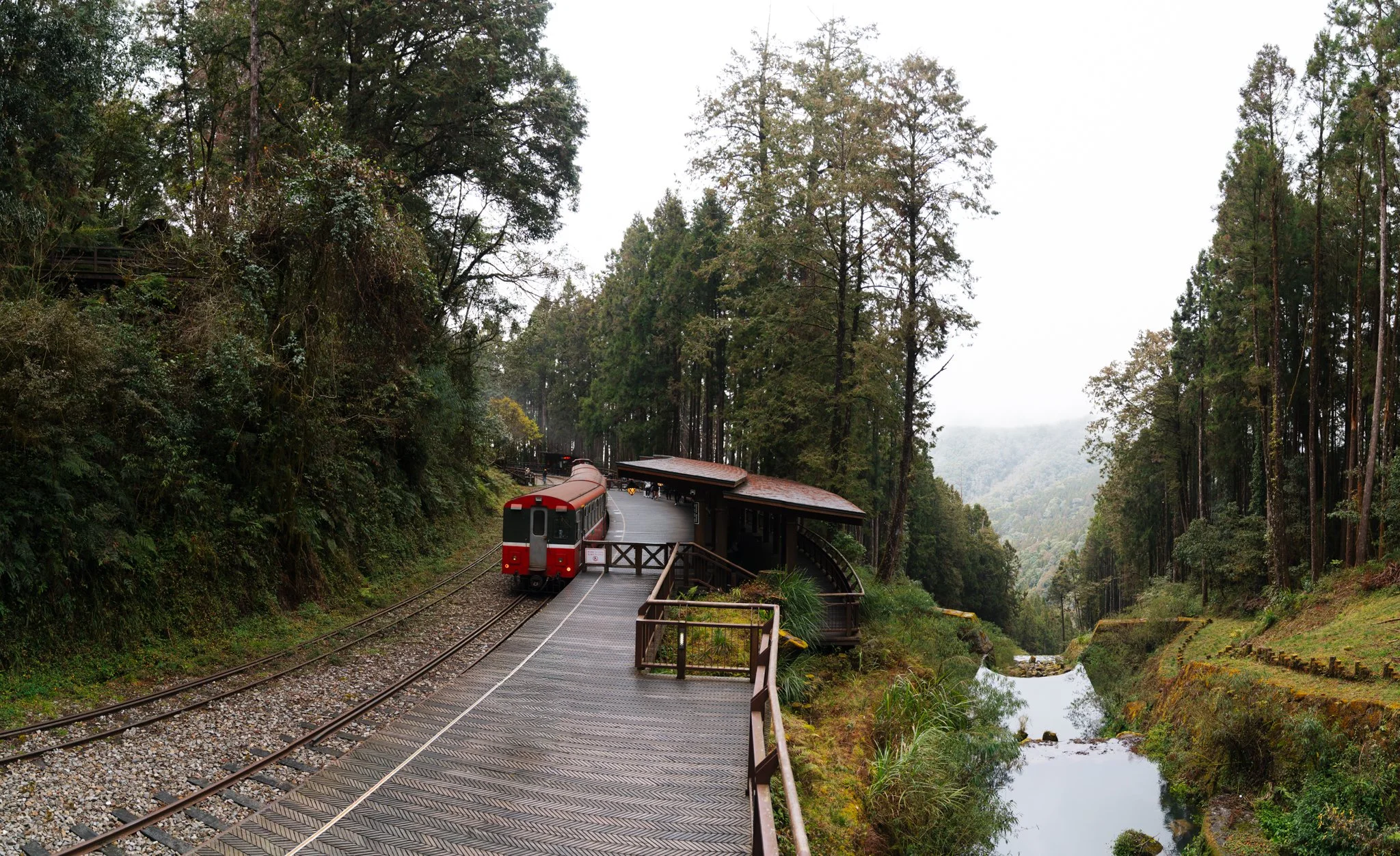
The Alishan Forest Railway is one of only three mountain railways in the world that climbs more than 2,000 meters, and it’s been doing it since 1912. Originally built for logging — the cypress and cedar forests here were considered some of the finest timber in Asia — the railway now carries passengers up through tunnels, switchbacks, and hairpin spirals that cling to slopes that feel barely possible to build on.
The whole ride up into the mountains felt like something out of a Miyazaki film. The trees close in around the train, covered in moss. Fog rolls between them. Everything is just so quiet. I kept looking out the window expecting to see a spirit creature or a soot sprite or something. It’s that kind of atmosphere. From the drone footage we got that day, the mountain skyline genuinely reminded me of Switzerland — ridge after ridge disappearing into the clouds.
The railway runs several lines within the Alishan area, including a dedicated sunrise train that departs once a day in the early morning to catch the famous Alishan sunrise from Zhushan. I genuinely wish I had planned to stay overnight just for that experience. It’s very firmly on the list for next time.
You can book a guided Alishan day tour from Chiayi that includes the forest railway and forest trails, which is what I’d recommend if it’s your first time and you don’t have a driver.
Alishan Forest Trails — Ancient Cypress Groves and Bamboo Paths
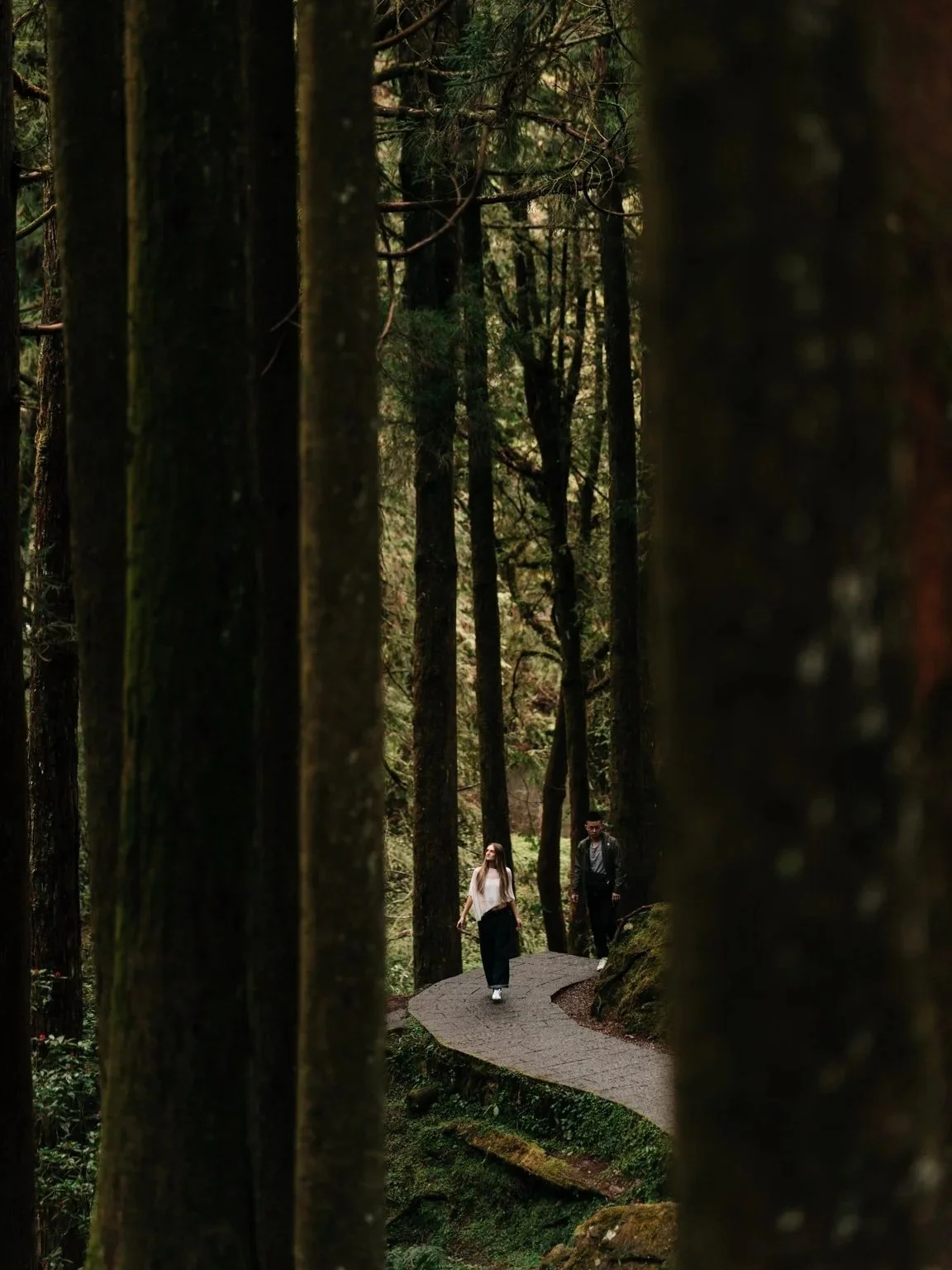
Once we arrived at Alishan Forest Recreation Area, we spent a couple of hours hiking through the ancient cypress forests and bamboo groves. It’s noticeably cooler up here compared to Chiayi city — pack a layer, seriously — and the fog settles low into the trees in a way that makes the whole forest feel calm and slightly otherworldly.
Some of these sacred cedar trees are over a thousand years old. They’re enormous. The kind of enormous that makes you feel genuinely small in the best way. The trails are well-maintained and not particularly strenuous — this isn’t a hardcore hike. It’s more of a meditative walk through one of the oldest living forests in Asia.
One small but important travel tip I picked up along the way: a local on a moped slowed down to warn me that some of the beautiful yellow wildflowers lining the path are actually super poisonous. Look, don’t touch. Noted, and passing it along.
The forest area also has several temples and shrines tucked into the trees — the kind of discovery that makes solo exploration here so rewarding. If you have extra time, the trail connecting to the Zhushan Sunrise Platform is worth doing even without the sunrise, just for the elevated mountain views.
High Mountain Oolong — Tea Tasting in Alishan
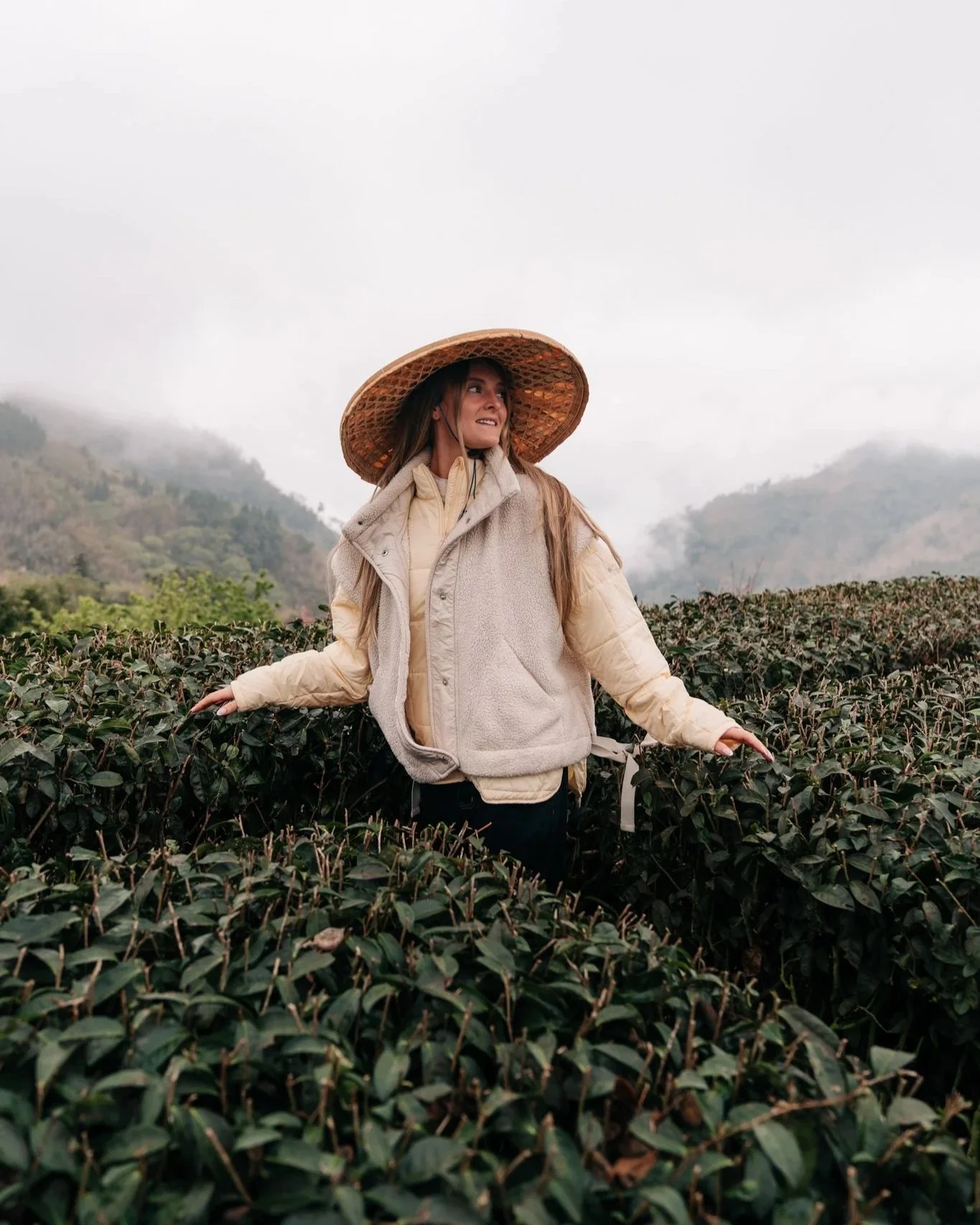
A huge part of Alishan’s identity is its tea. The region sits right at the altitude sweet spot for growing Alishan high mountain oolong — cool nights, warm days, and persistent cloud cover slow the growth of the tea leaves and concentrate their flavor in a way that flat-land teas just can’t replicate. Alishan oolong is consistently some of the most awarded tea in the world, and after doing a fresh tasting here, I completely understand why.
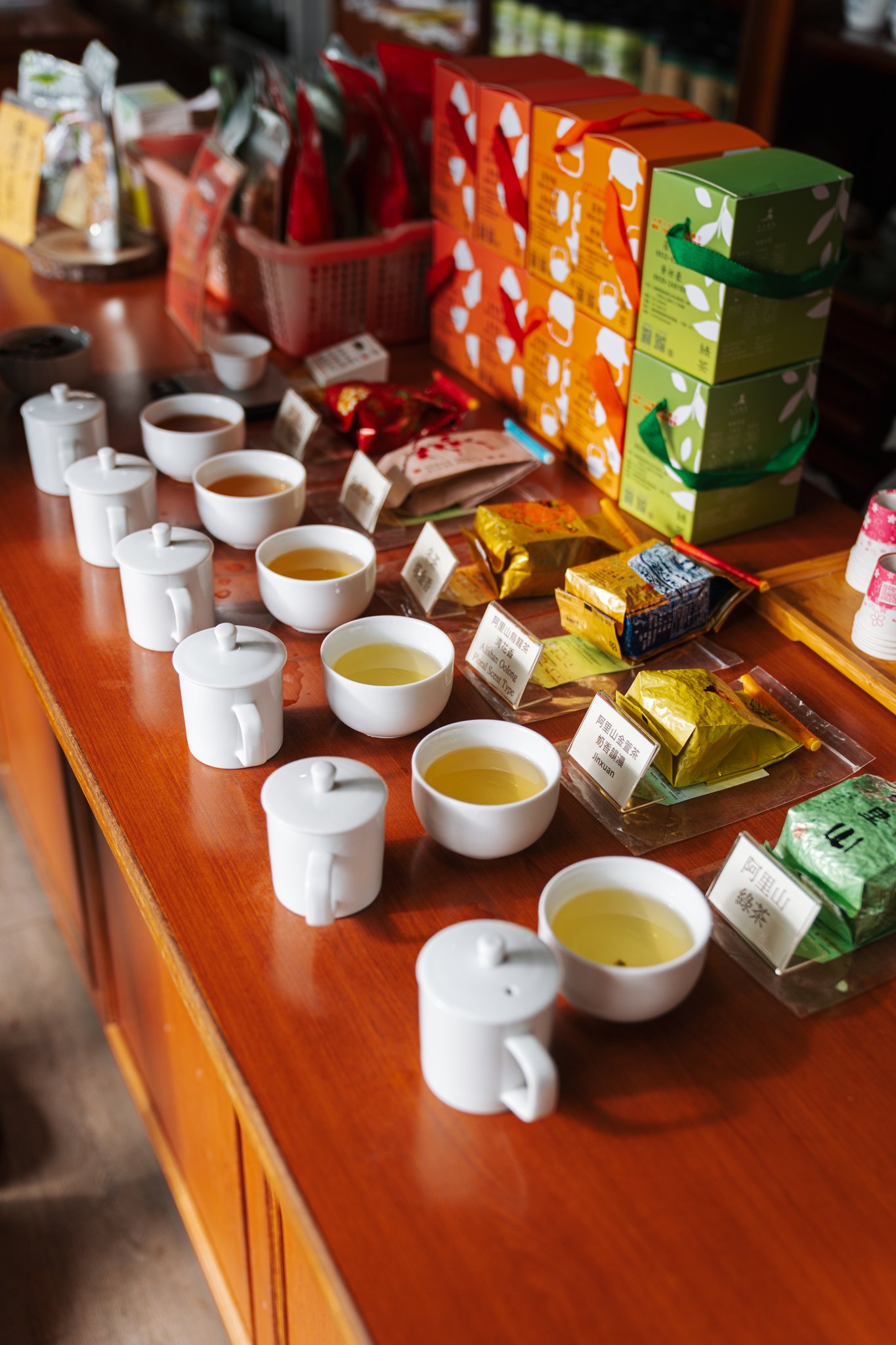
We visited a local tea farm and got to walk through the fields, learn about how the leaves are processed (the rolling and oxidation process is genuinely fascinating), and then sit down for a proper tasting — including one tea that had won multiple international awards. The flavor is delicate and floral in a way I wasn’t expecting. Nothing like the green teas I was used to.
If you visit Alishan and skip the tea, I don’t know what to tell you. It’s one of the most grounding, genuinely memorable experiences of the entire trip. Look for tea farms near Shizhuo or Ruili — there are small family-run operations all over the area that do tastings.
Where to Eat in Alishan — YUPASU Tsou Restaurant
For lunch, we ate at YUPASU Tsou Restaurant, an Indigenous restaurant nestled right into the mountains with views over the tea fields and surrounding peaks. The menu is rooted in Tsou Indigenous culture — BBQ mountain pork, bamboo rice, fresh mountain vegetables — and everything is made with locally sourced ingredients. There are vegetarian options too.
It was one of the best meals of the entire trip. The setting alone would make it worth it, but the food is genuinely excellent and unlike anything I had anywhere else in Taiwan. If you can only pick one place to eat in Alishan, go here.
Shizhuo Trail and the Alishan Sea of Clouds at Sunset
The afternoon took us through the Shizhuo Trail system — a network of six interconnected routes weaving through tea plantations, bamboo groves, cedar forests, and elevated mountain viewpoints. It’s quieter than the main Alishan Forest Recreation Area and feels more like a local secret than a tourist attraction.
As the sun started to drop, the sea of clouds rolled in below the mountain peaks. Alishan is actually celebrated for its "Five Wonders," and the sea of clouds is one of them — and seeing it at sunset, with the last light catching the tops of distant ridges rising above the horizon, is one of the most atmospheric things I’ve ever experienced anywhere in the world. It sounds dramatic. It was dramatic.
One thing I wish I’d known: the temperature drops fast once the sun goes down at altitude. Pack a proper warm layer — not just a light cardigan. The fog makes it feel even colder than the thermometer suggests.
Practical Tips for Visiting Alishan
How to get to Alishan from Chiayi: The most practical way is to hire a private driver or book a guided tour. The Alishan Forest Railway runs from Chiayi City up to the recreation area (it’s a beautiful 2.5-hour ride), but the schedule is limited. Public bus service exists but connections are infrequent. If you’re short on time, a driver gives you the most flexibility. From Taipei, take the Taiwan High-Speed Rail to Chiayi and arrange transport from there.
Best time to visit: Spring (March–May) and autumn (September–November) are the clearest, most pleasant seasons. February, when I visited, is cool and misty — perfect for the forest atmosphere, but pack accordingly. Avoid major holidays when crowds peak at the sunrise viewing platforms.
What to wear: Layers are essential. Chiayi city in winter is mild but Alishan sits at 2,200m and can be genuinely cold, especially in the morning and evening. A light waterproof jacket is a must since the forest is almost always damp.
How long to spend: A full day is the minimum to do it justice. An overnight stay means you can catch the famous sunrise from Zhushan — the once-a-day sunrise train makes it a bucket-list experience. If you can swing it, stay at one of the small guesthouses near the forest area.
Entrance fees: The Alishan National Forest Recreation Area charges an entrance fee (around NT$300 per person as of 2026). Forest Railway tickets are separate and should be booked in advance, especially on weekends.
For all my camera and gear used throughout this trip, check out my kit below:
Ready to Plan Your Alishan Trip?
Alishan is the kind of place that earns its way onto your all-time list quietly — it doesn’t announce itself, it just keeps being more beautiful and more interesting the longer you stay. The Alishan Taiwan travel guide that actually prepared me best was just going in with enough time and zero agenda. Walk slowly. Drink the tea. Take the train. Stay for the clouds.
For the full context on how Alishan fits into a larger Taiwan trip — including Taipei, Chiayi, Tainan, and Sun Moon Lake — read my complete 6-day Taiwan itinerary. And if you want to see the forest railway and sea of clouds in motion, head to my YouTube channel where the full Taiwan vlog is up.
You can also browse all my travel guides for more destination deep-dives.